

Lithium Battery Charging Cabinets
Lithium battery storage cabinets are essential for the safe and compliant storage of lithium-ion batteries, a ubiquitous power source across countless industries. These specialised cabinets are designed to mitigate the inherent risks associated with lithium batteries, such as thermal runaway, fire, and explosion, which can pose severe threats to personnel, buildings, and the environment.
15 Products
Armorgard PowerStation PWS12K 12 Bay Locker
Armorgard PowerStation PWS12K – Secure Charging Locker
The Armorgard PowerStation PWS12K doubles capacity with 12 individually locking compartments fo...
£1,400.94View details

Armorgard PowerStation PWS12P Battery Locker
Armorgard PowerStation PWS12P – Secure Charging Locker
The Armorgard PowerStation PWS12P provides 12 padlock-ready charging bays in a compact cabinet ...
£1,501.01View details

Armorgard PowerStation PWS6K Charging Locker
Armorgard PowerStation PWS6K – Secure Charging Locker
The Armorgard PowerStation PWS6K is a 6-door powered locker for safe charging and storage of sit...
£916.01View details
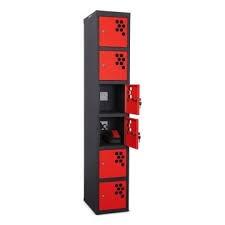
Armorgard PowerStation PWS6P Charging Locker
Armorgard PowerStation PWS6P – Secure Charging Locker
The Armorgard PowerStation PWS6P delivers the same 6-bay format with a padlock-ready hasp on eac...
£939.10View details
New

Armorgard PowerStor PWR1 Charging Cabinet
Armorgard PowerStor PWR1 – Compact Li-Ion Battery Charging Cabinet
The Armorgard PowerStor PWR1 is a compact, 1m deep lithium-ion battery charging wal...
£16,916.06View details
New
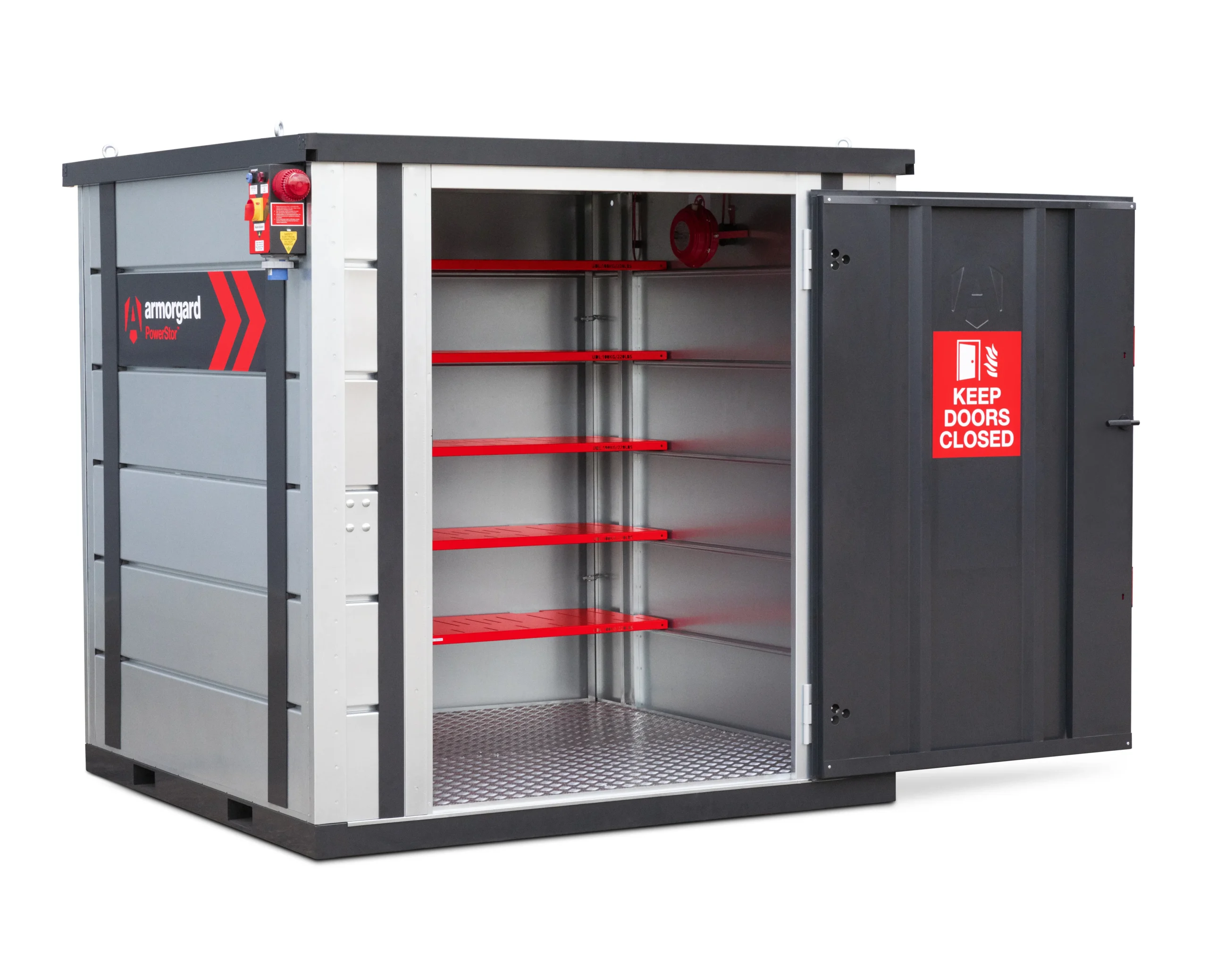
Armorgard PowerStor PWR2 Walk-In Charging Unit
Armorgard PowerStor PWR2 – 2m Li-Ion Battery Charging Walk-In Unit
The Armorgard PowerStor PWR2 is a 2m wide, 2m deep lithium-ion battery charging wal...
£18,304.06View details
New

Armorgard Qpod QP1 Lithium-Ion Charging Pod
Armorgard Qpod QP1 – Sealed Lithium-Ion Battery Charging Pod
The Armorgard Qpod QP1 is a compact, sealed lithium-ion battery charging unit built to UL...
£3,386.88View details

Armorgard VoltHub VH16-110 Charging Station
Armorgard VoltHub VH16-110 – Lithium-Ion Charging Station
The Armorgard VoltHub VH16-110 is a smart, site-ready station engineered to cut the risk fro...
£12,850.13View details

Armorgard VoltHub VH16-240 Charging Station
Armorgard VoltHub VH16-240 – Lithium-Ion Charging Station
The Armorgard VoltHub VH16-240 is a smart charging station designed to reduce risk when work...
£11,692.44View details
Technical Safety & Compliance Guide: Lithium-Ion Battery Cabinets
Storing and charging lithium-ion power packs requires strict adherence to fire safety protocols. Our range of secure battery charging cabinets offers verified fire resistance (up to 90 minutes thermal protection) to isolate battery malfunctions and prevent thermal runaway propagation on site.
Ventilation, Power Distribution & Technical Specifications
Each professional charging locker is equipped with integrated, surge-protected multi-socket power strips and automated extraction fans. Technical maintenance ports are fitted with standard 2\" fire-sealed conduit collars to protect supply cabling pathways without compromising the unit's structural integrity.
While specific UK regulations for general lithium battery storage are still evolving, guidance from the Health and Safety Executive (HSE) and industry best practices strongly advocate treating them as hazardous substances. There isn't one single overarching "battery cabinet" standard, but correct storage demands adherence to several critical safety measures informed by key European and British standards:
- Fire Protection: Cabinets should offer robust fire resistance, often complying with EN 14470-1 (Safety Storage Cabinets for Flammable Liquids), categorising cabinets by fire resistance classes (e.g., Type 90 for 90 minutes). Features like self-closing, fire-rated doors and internal fire suppression systems are crucial. The VDMA 24994 German guideline is also widely recognised as a leading benchmark for safety and fire protection in lithium-ion battery storage across Europe.
- Temperature Control and Ventilation: Lithium batteries are sensitive to temperature extremes. Cabinets with integrated ventilation systems or active cooling prevent overheating, disperse hazardous fumes, and reduce the risk of thermal runaway, aligning with safety principles outlined in series like BS EN IEC 62485 (Safety Requirements for Secondary Batteries and Battery Installations).
- Containment: Spill sumps and leak containment systems are vital to prevent the spread of corrosive electrolytes in case of battery damage or leakage.
- Physical Protection: Robust construction, often from double-walled steel, protects batteries from mechanical damage that could lead to short circuits.
- Monitoring and Alarms: Advanced cabinets may include smoke detectors and alarm systems to provide early warning of incidents, a principle reinforced by various safety standards.
- Segregation: Damaged or defective batteries must be immediately isolated and stored in dedicated quarantine containers to prevent further hazards, emphasising risk mitigation.
Investing in certified lithium battery storage cabinets ensures regulatory compliance, safeguards staff, minimises property damage, and protects the environment from hazardous chemical release. These cabinets are an indispensable component of any comprehensive safety strategy for businesses handling lithium-ion batteries, with a thorough risk assessment always being paramount.