
Dust Suppression Water Bowsers
Taming the Dust: The Indispensable Role of Towed Water Bowsers in UK Dust Suppression
Dust – an ever-present byproduct of human activity, particularly prevalent in the dynamic landscapes of construction, agriculture, and unpaved roadways. While seemingly innocuous, airborne dust carries a significant burden, impacting human health, environmental quality, and operational efficiency. In the United Kingdom, with its stringent health and safety regulations and a growing awareness of environmental stewardship, effective dust suppression isn't merely a courtesy but a legal and ethical imperative. At the forefront of this battle against the particulate menace stands the towed water bowser, an unsung hero equipped with a pump and spray nozzle, diligently damping down dusty roads and construction sites across the nation.
The Pervasive Problem of Dust: More Than Just a Nuisance
To fully appreciate the critical role of water bowsers, it's essential to understand the multifaceted problems posed by uncontrolled dust.
Health Hazards: Fine particulate matter (PM2.5 and PM10) can penetrate deep into the respiratory system. Prolonged exposure is linked to a range of serious health issues, including respiratory illnesses (asthma, bronchitis, COPD, silicosis), cardiovascular problems, and eye and skin irritation. Certain dusts, like crystalline silica, are also known carcinogens. For workers on construction sites and residents living near dusty areas, these health risks are a primary concern, necessitating robust dust control measures.
Environmental Impact: Dust deposition has far-reaching environmental consequences:
- Air Quality Degradation: Contributes to smog and reduces visibility.
- Soil and Water Contamination: Carries pollutants, affecting soil composition and introducing sediments into water bodies, impacting aquatic ecosystems.
- Damage to Vegetation: Coats leaves, hindering photosynthesis.
Operational Inefficiencies and Economic Costs: Beyond health and environment, dust directly impacts productivity and incurs financial burdens:
- Reduced Visibility: Creates hazardous driving and working conditions, increasing the risk of accidents.
- Equipment Wear and Tear: Abrasive dust accelerates wear on machinery, leading to increased maintenance costs, downtime, and premature equipment failure.
- Reduced Productivity: Workers may experience discomfort, leading to decreased morale and efficiency.
- Legal Ramifications and Fines: Non-compliance with dust control regulations can result in hefty fines, project delays, and reputational damage.
The Towed Water Bowser: A Workhorse of Dust Suppression
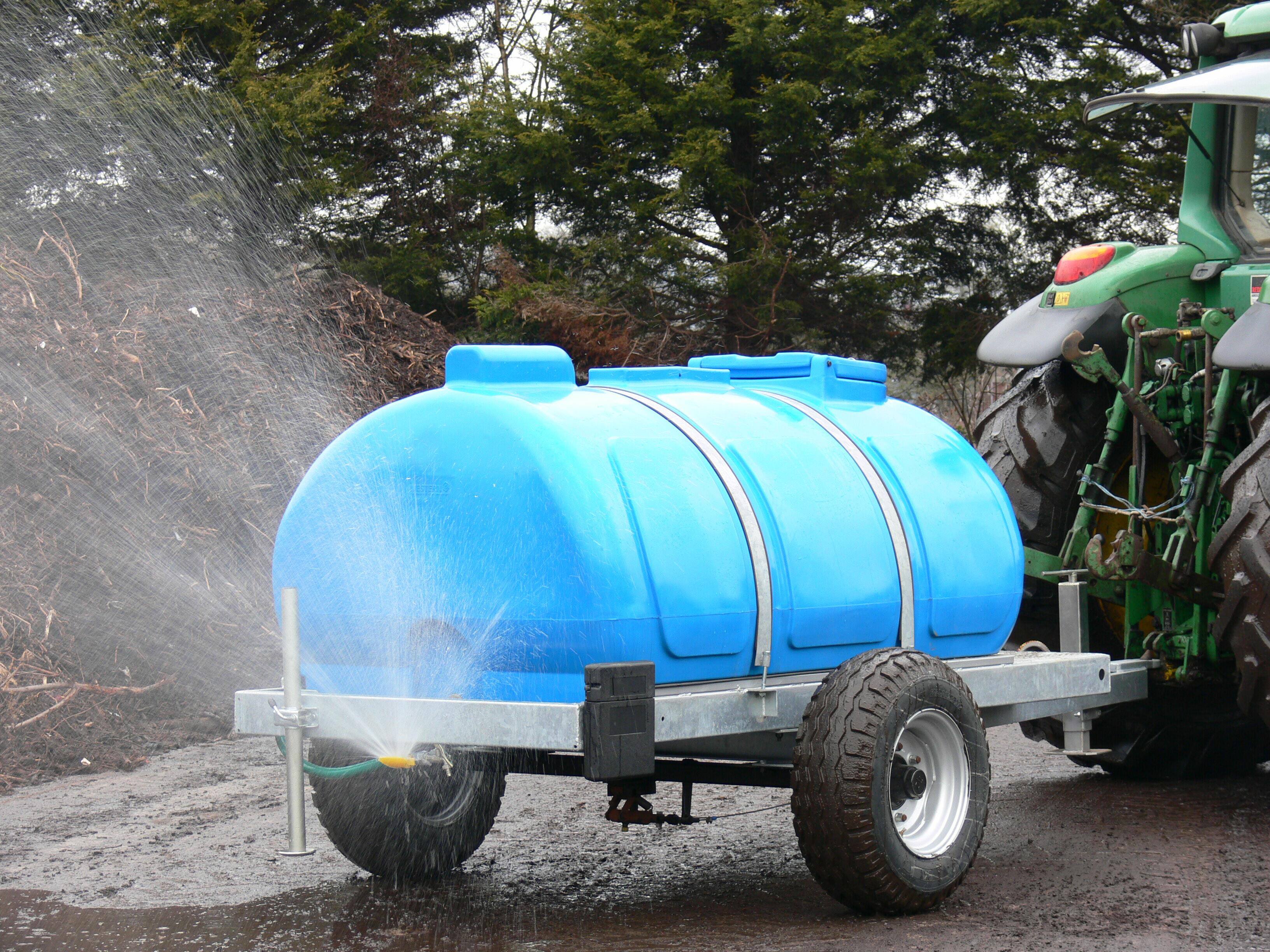
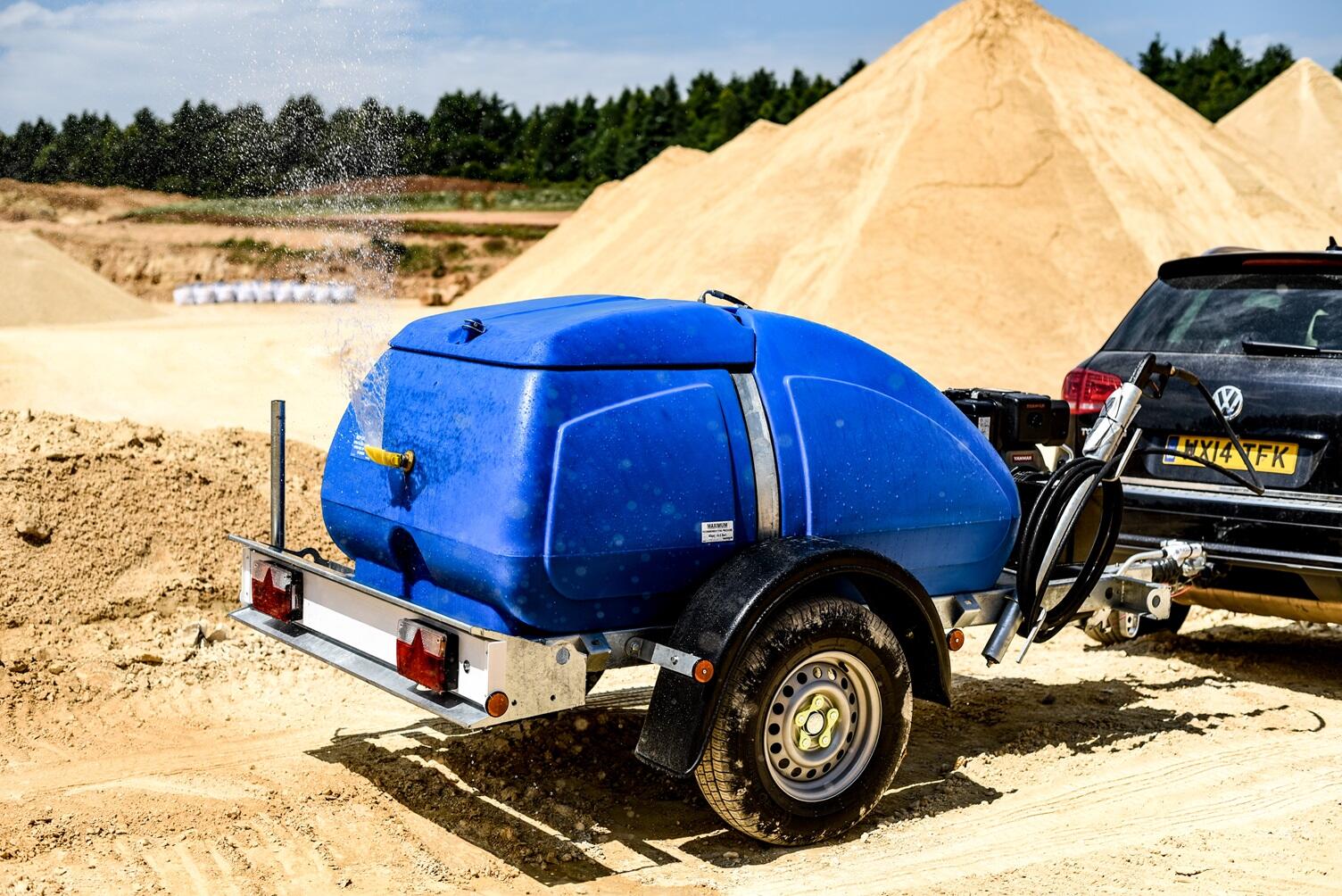
In the face of these challenges, the towed water bowser emerges as a simple yet incredibly effective solution. These robust units, comprising a large tank mounted on a trailer chassis, are designed for easy towing by a variety of vehicles. Their core functionality, however, lies in their integrated pumping and spraying systems.
Components and Functionality:
- Water Tank: Available in various capacities, from 500 litres for smaller applications to over 10,000 litres for extensive sites, made from durable materials like polyethylene or steel. Baffled for safe, stable towing.
- Integrated Pump: This is the heart of the dust suppression system. Powered by a small internal combustion engine or a power take-off (PTO) from the towing vehicle, the pump draws water from the tank and pressurises it for discharge. This can be done with a low-pressure water pump or pressure washer using a venturi system to power water to the nozzle.
- Spray Nozzles and Bars: Connected to the pump, a variety of nozzles deliver water in a fine, controlled mist or a more direct spray.
- Spray Bars: Often mounted at the rear or sides, creating a wide, even curtain of water, ideal for damping down large areas.
- Adjustable Nozzles: Allow operators to control the spray pattern and intensity.
- Handheld Lances: High-pressure hose and lance enable precise targeting of specific dusty spots like stockpiles or demolition debris.
- Hose Reels and Connections: For ease of use and versatility, many bowsers include integrated hose reels and quick-release couplings.
- Chassis and Towing Hitch: A robust chassis provides stability, and a standard towing hitch ensures universal compatibility. A choice of ring for site tow bowsers and ring or ball for highway tow bowsers.
How it Works: The Principle of Agglomeration
The effectiveness of water in dust suppression lies in the principle of agglomeration. When fine water droplets are introduced into the air, they collide with airborne dust particles. Due to surface tension and electrostatic forces, these tiny dust particles adhere to the water droplets, becoming heavier and larger. Once they reach a sufficient size and weight, they fall out of the air, settling on the ground. This process effectively removes dust from the breathing zone and prevents its further dispersion once on the ground..
Applications Across the UK: Where Bowsers Make a Difference
Towed water bowsers are indispensable across a diverse range of sectors in the UK:
- Construction Sites: The most prevalent application. Bowsers are used to damp down haul roads, moisten demolition debris, wet down material stockpiles, and control dust during cutting and grinding.
- Unpaved and Rural Roads: In rural areas, bowsers are deployed by local authorities and private landowners to regularly dampen these surfaces, improving air quality and visibility for residents and road users.
- Quarries and Mining Operations: These sites generate vast quantities of dust. Large-capacity bowsers are essential for continuous dust suppression across these expansive operations.
- Demolition Projects: Demolishing old structures releases significant amounts of dust. Water bowsers are critical for controlling these airborne particles, protecting workers and the surrounding environment.
- Agricultural Settings: Used for dust suppression during harvesting and tilling, as well as for targeted irrigation or livestock watering in remote areas.
- Event Management: For outdoor events or temporary car parks on paved and unpaved ground, bowsers can mitigate dust, enhancing attendee comfort and safety.
Advantages of Using Towed Water Bowsers for Dust Suppression
The widespread adoption of towed water bowsers for dust suppression in the UK is testament to their numerous advantages:
- Mobility and Flexibility: Easily moved around large and complex sites, targeting dust hot-spots as needed, crucial for dynamic working environments.
- Cost-Effectiveness: Relatively low initial investment and operational cost compared to more complex fixed systems.
- Simplicity of Operation: Generally straightforward to operate, requiring minimal specialised training.
- Environmental Responsibility: Actively suppressing dust demonstrates a commitment to environmental protection and regulatory compliance.
- Improved Health and Safety: Directly reduces the exposure of workers and the public to harmful airborne particulates.
- Reduced Equipment Maintenance: Minimises abrasive dust, extending the lifespan of machinery and vehicles, leading to significant long-term savings.
- Enhanced Productivity: Better visibility and healthier working conditions contribute to increased worker comfort and efficiency.
Best Practices for Effective Dust Suppression with Bowsers
While the principle is simple, maximising the effectiveness of a water bowser requires adherence to best practices:
- Regular Application: Dust suppression is an ongoing process. Regular damping down, especially during dry and windy conditions or periods of high activity, is crucial.
- Optimal Water Coverage: Ensure spray nozzles are correctly calibrated and positioned for even coverage. Avoid oversaturating or insufficient coverage.
- Targeted Application: Identify primary dust sources and prioritise those areas for efficient water use.
- Water Source and Quality: Ensure access to a reliable water source.
- Weather Conditions: Adjust spraying frequency and volume based on dry, hot, and windy weather.
- Maintenance: Regular maintenance of the pump, nozzles, hoses, and tank is essential for optimal performance.
- Training: Operators should be adequately trained in safe and effective bowser operation.
- Compliance: Always adhere to local and national regulations regarding dust control, such as those set by the Health and Safety Executive (HSE) in the UK, including having a clear dust management plan.
Conclusion
In the demanding environment of UK construction sites and unpaved roads, the towed water bowser with its pump and spray nozzle stands as an indispensable tool in the fight against airborne dust. Far from being a luxury, it is a fundamental component of responsible site management, safeguarding worker health, protecting the environment, and ensuring operational efficiency. Its mobility, simplicity, and effectiveness make it the workhorse of choice for countless businesses and local authorities across the nation. As the UK continues to prioritise health, safety, and environmental stewardship, the humble water bowser will undoubtedly remain at the forefront of efforts to tame the dust demon, ensuring cleaner air and safer working conditions for all.
Please contact our water bowser experts for more information. Our Highway Tow and Site tow water bowser range is generally available on a short lead time of a few days. Call us on 01722 442446 or use our contact page